How Proper Insulation Improves Heater Performance
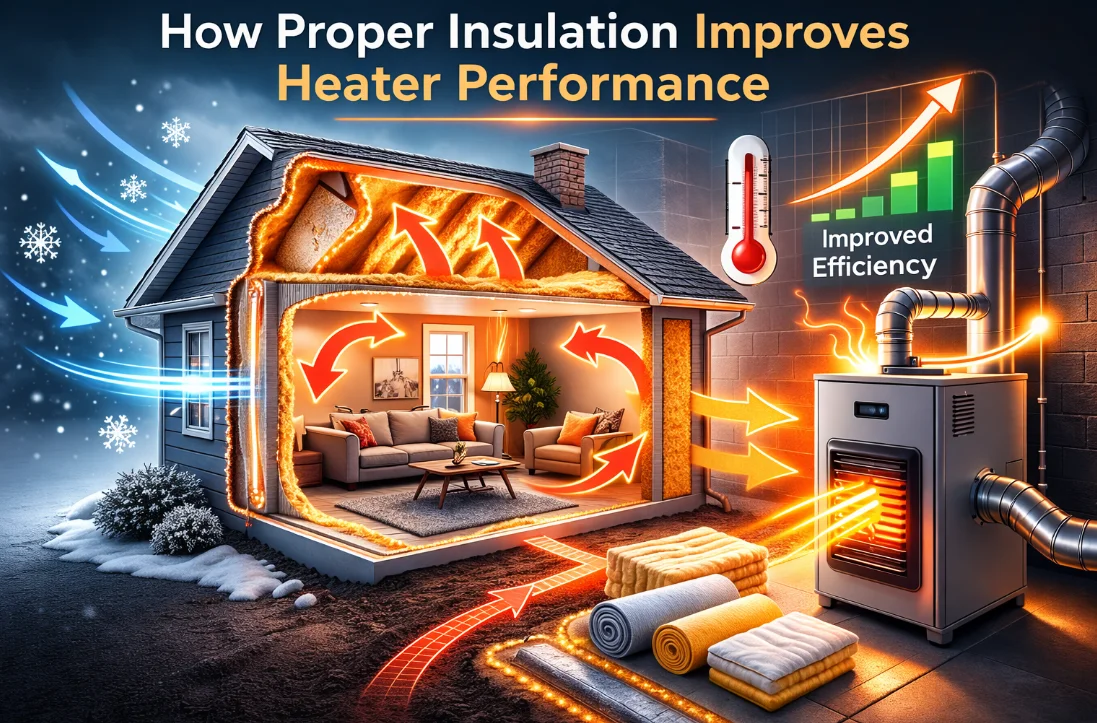
Your home’s insulation affects your heater’s performance more than you may realize. Heat easily escapes through your walls, attic, and crawl spaces when they are not properly insulated.
This means that your heater has to run constantly to keep your house warm. The result is higher utility bills and an uncomfortable home.
Insulation acts like a blanket for your house.
Insulation creates a barrier between the heated air in your home and the cold air outside. Without insulation, heat from your home escapes out of your walls and through your ceiling and floors. Your heater has to kick back on to replace the heat that you lost.
If your home is insulated properly, your heater will not have to run as often or for as long to heat your home. This seems pretty obvious, but it makes a world of difference.
How Does Insulation Improve Heater Performance?
Heat generated by your heater should stay inside your home. Heat rises up and tries to escape your home all the time. Insulation greatly reduces the rate that heat travels through your walls and ceiling.
A well-insulated home allows your heater to heat your home to the desired temperature quicker. Your heater will also not have to turn on as frequently to maintain the desired temperature. This means there will be less wear and tear on your heater. You will also notice that rooms will retain heat longer between cycles. Another thing you will notice is that the temperature in your home will be more even.
If your home is poorly insulated your heater will have to run constantly to keep your home warm. This means that you are using more fuel or electricity than you have to. You will notice higher bills on your monthly utilities.
Constantly running your heater also puts extra stress on it. You could end up needing repairs more often if your house is poorly insulated.
Types of Insulation
There are several different types of insulation that you can use in your home.
- Fiberglass batts – These are rolls of insulation that you may have seen in pink or yellow. These types of insulation are used between studs in walls and ceilings.
- Blown-in – Blown-in insulation is what it sounds like. It is light, fluffy particles that get blown into your attic and walls. Contractors use a blowing machine to apply this type of insulation.
- Spray foam – Spray foam insulation comes in a can and expands when it hits the air. It will also foam up and harden to create an air tight seal. This helps keep heat from escaping as well as preventing air leaks.
- Rigid foam board – This type of insulation provides a high “R-value” in a thin layer. The R-value is the measurement of resistance to heat flow. Rigid foam board works well in basements and on the outside of exterior walls.
Where Should You Insulate?
While all of these areas benefit from insulation, some areas of your home are more important than others.
- Attic – This is the single most important place to insulate. Heat rises which means that heat is constantly trying to escape the ceiling of your home. By adding attic insulation, you can reduce heating costs by 20-30%. You should have 12- 15 inches of attic insulation.
- Walls – Properly insulating your exterior walls will allow you to feel less drafts and cold spots. You will also notice that your rooms retain temperature better.
- Floor – If you have rooms in your home that sit over a garage or crawl space you should insulate these floors. You won’t have to touch the cold floor during the winter months.
- Basement/Crawl space – Most people forget about these areas, but it is important to insulate the basement walls and rim joists.
Signs You Need Insulation
Your home could be telling you that it needs more insulation.
You can feel drafts of cold air coming from your walls or windows. Your heating bills are much higher than similar homes in your neighborhood. If this is the case then you most likely have insufficient insulation.
You have rooms that are always colder than the rest of the house even when the heater is on. You begin to notice ice dams forming on your roof during the winter months.
Your heater is constantly running but your house still feels cold. Constantly running the heater is wasting energy and money.
You can see your attic insulation, and it is less than 6 inches deep. Also, if you live in an older home your insulation could have settled or become outdated.
Benefits of Insulation
Lower heating bills are just the beginning of what you can save by insulating your home. Insulation will have you saving money in many different ways.
You will notice lower heating bills as soon as your home is insulated. The average homeowner will save between 15-25% on heating costs by adding insulation.
Your heater will last longer because it will not have to work as hard. Thus, you can put off replacing your heater for many years. You also will not have to spend as much on repairs with better insulation.
You can also increase the value of your home by adding insulation. Energy efficient homes are a big selling point in today’s market. Not only will they sell faster, but they can also fetch you a higher price.
Real Case Study: Insulation Reduced Heating Bills & Stayed Toasty Longer
Here’s another great real‑world example of insulation reducing heating bills and improving comfort. It’s a cavity wall insulation case study recorded by Simple Green Energy, in partnership with EDF.
The homeowner had heat loss problems and poor energy bills due to uninsulated cavity walls. After surveyors visited and confirmed heat was escaping through the walls, cavity wall insulation was added using Knauf Supafil wool. Once installed, residents could tell heat stayed in their home for longer during the winter.
They used their central heating less, saving energy and money. Their home retained heat better and was more comfortable, while insulation meant their heater didn’t have to work quite so hard to warm the home. Heat loss dropped by as much as 35 % through cavity walls.
Read their full cavity wall insulation case study here: https://www.simplegreenenergy.org/cavity-wall-insulation-case-study-london/
Real results from the UK. See how much of a difference insulation makes by yourself.
Frequently Asked Questions (FAQs)
How much can insulation save on heating bills?
You can reduce heat loss significantly by properly insulating your home. That includes loft insulation, wall insulation, floor insulation, and more. Adding cavity wall insulation alone has been shown to reduce heat loss through walls by up to 35 % in the UK. Annual fuel bill costs are also cut dramatically.
How does insulation improve heater performance?
Heat won’t escape as easily from your home if you improve your insulation. As a result, your heater won’t need to run to top up the air as often or for as long. You’ll lower your energy bills while easing wear on your heating system and keeping temperatures more consistent.
Which types of insulation are most impactful?
Loft/attic insulation is a common first choice as it prevents heat from rising up and escaping out of your home. Cavity wall insulation is also beneficial as it fills gaps in your walls. Likewise, floor insulation can help prevent cold air from coming up through your floors. Spraying foam insulation can help seal gaps for an air-tight home.
How can I tell if my home is under-insulated?
If you notice drafts or cold spots indoors, it could be a sign you need more insulation. Running heaters frequently, higher-than-neighbourhood heating bills, and visible old or thin insulation are other clues.
Does insulation help during summers as well?
Yes! While we often think about heating homes during winter, insulation helps year‑round. It prevents heat from escaping during winter and keeps hot air outside during summer too.
Will insulation help my heater last longer?
Correctly installing insulation allows your heater to run less and won’t needlessly wear down your system. You can avoid (or delay) needing expensive heater repairs by installing insulation.
Will adding insulation to my house increase its value?
Insulation makes your home more energy efficient and can increase its value. If you intend to sell in the future, you could benefit from installing insulation sooner rather than later.
Final Words
Insulation makes your heater work more efficiently by keeping the warm air where it belongs. Inside your home! Not only will your heater have to run less, but it will run less frequently. Your home will feel more comfortable since it retains heat better.
You save money, your heating system lasts longer, and you help the environment. What else could you ask for from a few simple steps? Don’t settle for a poorly insulated home. Take the time to evaluate what you need and take action.

Deepak Sharma
Namaste! I’m Deepak Sharma, the creative mind behind SocialFunda, your go-to hub for Facebook bios, captivating captions, Instagram bios, and a treasure trove of Hindi Shayari. As a digital enthusiast, I am passionate about curating content that adds a touch of flair to your online presence.