
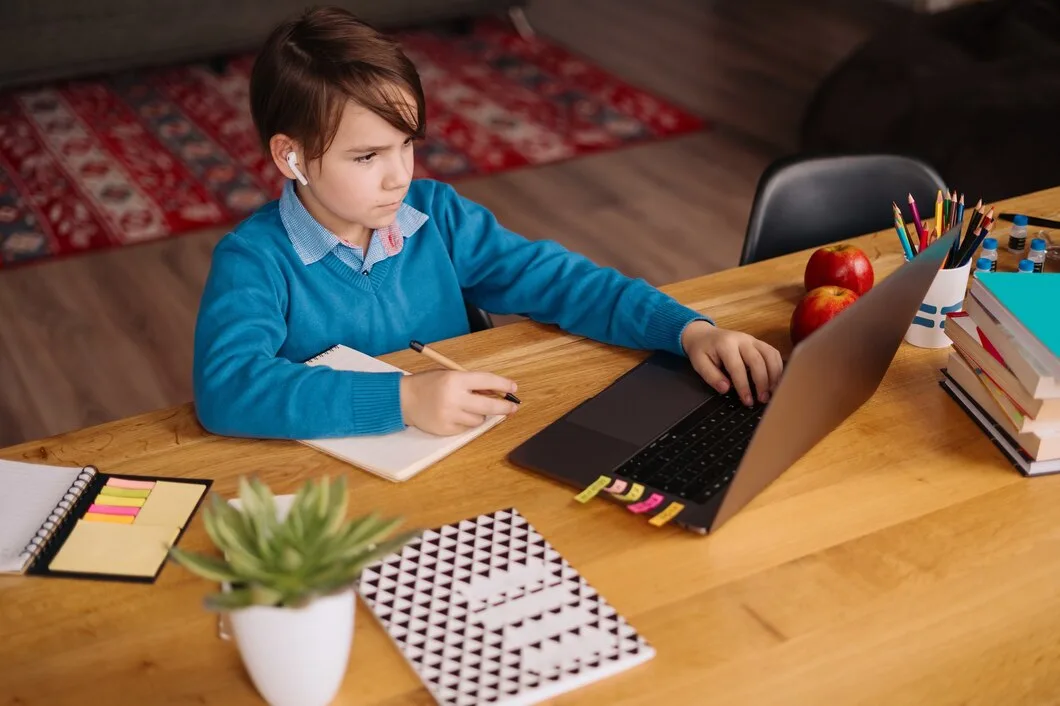
How Educational Websites Are Transforming Learning for Today’s Children
Recall how you learned as a child. Perhaps it was an encyclopedia, dog-eared and old, a patient teacher at a chalkboard, or a cram session at two in the morning with a textbook. These days kids have something none of us had: a world of knowledge at their fingertips, whenever they need it, in formats that actually keep them engaged.
Educational websites have quietly become one of the biggest shifts in how kids learn. Not just at school, but at home, in the car, and pretty much anywhere a tablet goes. And while discussions around screen time are real and valid, the quality of what children are accessing online is far more important than the hours spent on it.
In this article, we look at how digital learning platforms are changing education, what to look for in a good education website, and how parents and teachers can find the right balance between screens and traditional ways of learning.
The Rise of Digital Learning
Children today are often described as “digital natives” – a generation that has grown up with smartphones, tablets and smart TVs all around them. But these screens are more than just entertainment devices. They’ve become gateways to learning experiences that generations before could only dream of.
Today, a child who is struggling to learn fractions can watch an animated explainer video, participate in an interactive quiz, and get instant feedback – all in the same session. A curious seven-year-old dinosaur fan can learn about prehistoric timelines, listen to audiobook-style narrations, and test their knowledge with fun challenges. This kind of learning, personalized and on demand, was simply not possible a generation ago.
Properly designed educational websites can meet each child where they are, rather than a traditional classroom where one teacher has 30 students at different levels. Doesn’t hurry the slow one, doesn’t bore the fast one. That flexibility is a game-changer — especially for kids who need a little more time to grasp the concepts, or those who are flying ahead and craving more depth.
Key Benefits of Educational Websites
1. Learning That Doesn’t Stop at the School Gate
One of the most apparent benefits is accessibility. Learning doesn’t have to stop at the end of the school day. Educational websites enable children to continue their journey at home, whether they missed a lesson, wish to practise what they learnt, or are simply curious about something in a book.
This is especially useful for parents who want to be involved in their child’s education, but may not remember long division or the water cycle in detail. The right platform can help parents learn with their kids, making homework time a more collaborative and less stressful experience for everyone.
2. Engagement Through Interactivity
There’s a reason kids will spend an hour playing an educational word game without realising they’re building their vocabulary. Interactivity turns the experience from passive to active — and active learners learn a lot more information.
Drag and drop matching words, solve a puzzle to unlock the next level, or watch animated characters explain a science concept. Interactive learning keeps children mentally present in a way that a printed worksheet often cannot. “It rewards effort, gives instant feedback and makes progress feel tangible and fun.”
3. Accommodating Different Learning Styles
Not every child absorbs information the same way. Some children are visual learners who thrive on diagrams and videos. Others prefer listening to explanations. Still others need to write things down or do something practical to make it stick.
Good educational websites recognise this diversity and offer content in multiple formats. A lesson on the solar system might include a video, an infographic, a written summary, and an interactive 3D model — giving every type of learner a way in. This kind of flexibility is often hard to achieve in a busy classroom but is built into the best digital platforms by design.
4. Building Confidence and Independent Thinking
There is value in allowing a child to sit down, find what he needs and learn something new on his own. Yes, it builds research skills – but it builds confidence as well. “Children get a real sense of achievement when they answer a question that they were interested in or they complete a quiz and discover they have got eight out of ten.
Over time, kids who regularly use good educational resources develop better study habits and a stronger sense of ownership of their education — traits that will serve them well throughout their academic careers.
What Makes a Great Educational Website?
This is where parents and educators need to be discerning. The internet is vast, and not everything that is labeled “educational” is necessarily created with a child’s learning in mind. Some sites are cluttered with ads, poorly structured, or just repurpose adult content in a superficial way.
When evaluating an educational website for children, there are a few key things worth looking for:
- Clear, age-appropriate language that doesn’t talk down to children
- Well-structured content that follows a logical learning path
- Interactive elements that encourage participation rather than passive consumption
- A safe browsing environment, free from inappropriate ads or external links
- Regularly updated content that stays current and relevant
- Coverage across a range of subjects and skill levels
For example, platforms that offer dedicated English learning activities for kids go well beyond simple spelling drills. The best ones weave vocabulary, grammar, reading comprehension, and communication skills into exercises that feel purposeful — not like busywork. A child working through a well-crafted English activity isn’t just memorising rules; they’re practising the kind of language use that carries over into real conversations, essays, and reading for pleasure.
Why Storytelling Still Sits at the Heart of Learning
All the technology that has been added to education has not changed some things — and should not. One of those is telling stories. Before classrooms and curricula, humans passed knowledge down the generations through stories. That instinct is very much alive in children today.
Stories do what worksheets and explainer videos often can’t do: They build emotional connection. A child reading about a character overcoming challenges isn’t just following a plot. They’re building empathy, learning how to deal with adversity, and expanding their understanding of the world beyond their own experience.
The digital age has not reduced storytelling possibilities; it has multiplied them. Kids now have access to a huge range of stories, in genres, cultures and reading levels – many with added illustrations, audio narration and comprehension questions to help them engage more deeply.
You will see that regular reading, even as little as 20 minutes a day, is consistently associated with a better vocabulary, better comprehension, and better academic performance across the board — not just in English. It also develops concentration and the ability to follow longer, more complex ideas, which becomes more and more important as children move through school.
Platforms like Kids World Fun offer a broad library of stories, poems, worksheets, and educational activities tailored specifically to children. What makes such platforms genuinely useful is the range they offer — from simple picture stories for early readers to more complex narratives that challenge older children — all within a safe, child-friendly environment.
Finding the Balance: Screens and the Real World
It would be wrong to think that educational websites are the only solution. They’re a powerful tool — but tools only work well if you use them thoughtfully. Great for nails. Not so great for everything else.
Children and screen-time research is complicated. It’s not the screens, it’s the way they are used. There’s a world of difference between a child consuming random videos for two hours and a child spending an hour doing structured, interactive learning, and then doing a creative activity based on what they learned online.
A few practical approaches that tend to work well for families:
- Set boundaries around when and how long devices are used for learning — and stick to them consistently
- Choose platforms with a clear educational purpose rather than those that blur the line between gaming and learning
- Sit with your child occasionally — ask what they’re doing, show interest, and make learning a shared activity
- Follow up digital learning with something tactile — draw what they learned, act it out, or talk about it over dinner
- Ensure digital learning doesn’t replace books, outdoor play, or creative unstructured time — it should add to these, not crowd them out
Teachers are also finding ways to integrate educational Web sites into classroom routines without sacrificing the human connection that is central to good teaching. One example of how digital and face-to-face learning can work together rather than against each other are flipped classroom models, where children explore a topic online before discussing it in class.
Preparing Children for a World That’s Already Here
The world children are growing up in is fundamentally different to the one most of us grew up in . Being digitally literate—being able to find, evaluate and use information online—is no longer a bonus skill. It’s a fundamental one.
Educational websites, if chosen with care, do more than teach facts and figures. They help children become comfortable navigating a digital world, build habits of self-directed learning and develop the curiosity that drives real intellectual growth. A child who learns to find answers, learn about topics of interest and evaluate what they find online is gaining skills that will serve them long after any specific subject matter has been forgotten.
But the issue for parents and educators isn’t to pick between technology and traditional learning, but to combine the two in ways that bring out the best of both. The good news is that there are some really good resources out there and they have been thoughtfully created with children’s development in mind. Finding them, using them well, and staying on top of what children are learning online is what makes all the difference.”
Learning has a future. It’s here. For many children, it’s already here — and it looks a lot like curiosity, a screen and a parent or teacher paying attention.

Deepak Sharma
Namaste! I’m Deepak Sharma, the creative mind behind SocialFunda, your go-to hub for Facebook bios, captivating captions, Instagram bios, and a treasure trove of Hindi Shayari. As a digital enthusiast, I am passionate about curating content that adds a touch of flair to your online presence.